

Research-Based Tutoring in Sydney: The GEA Learning Method
At Global Education Academy (GEA), we provide research-based tutoring in Sydney designed to help students understand concepts deeply, develop strong problem-solving skills and become confident, independent learners.
Our tutoring programs include Maths, English, Opportunity Class (OC), Selective School, Scholarship and HSC preparation, delivered at our Turramurra and Kogarah tutoring centres, as well as online.
At the heart of our teaching is the Five-C Method™, developed by GEA founder Dr. Majeda Awawdeh and informed by principles from Cognitive Load Theory (CLT).
Rather than relying on memorisation or repetitive practice alone, our approach focuses on helping students understand, apply, reason and solve problems independently.
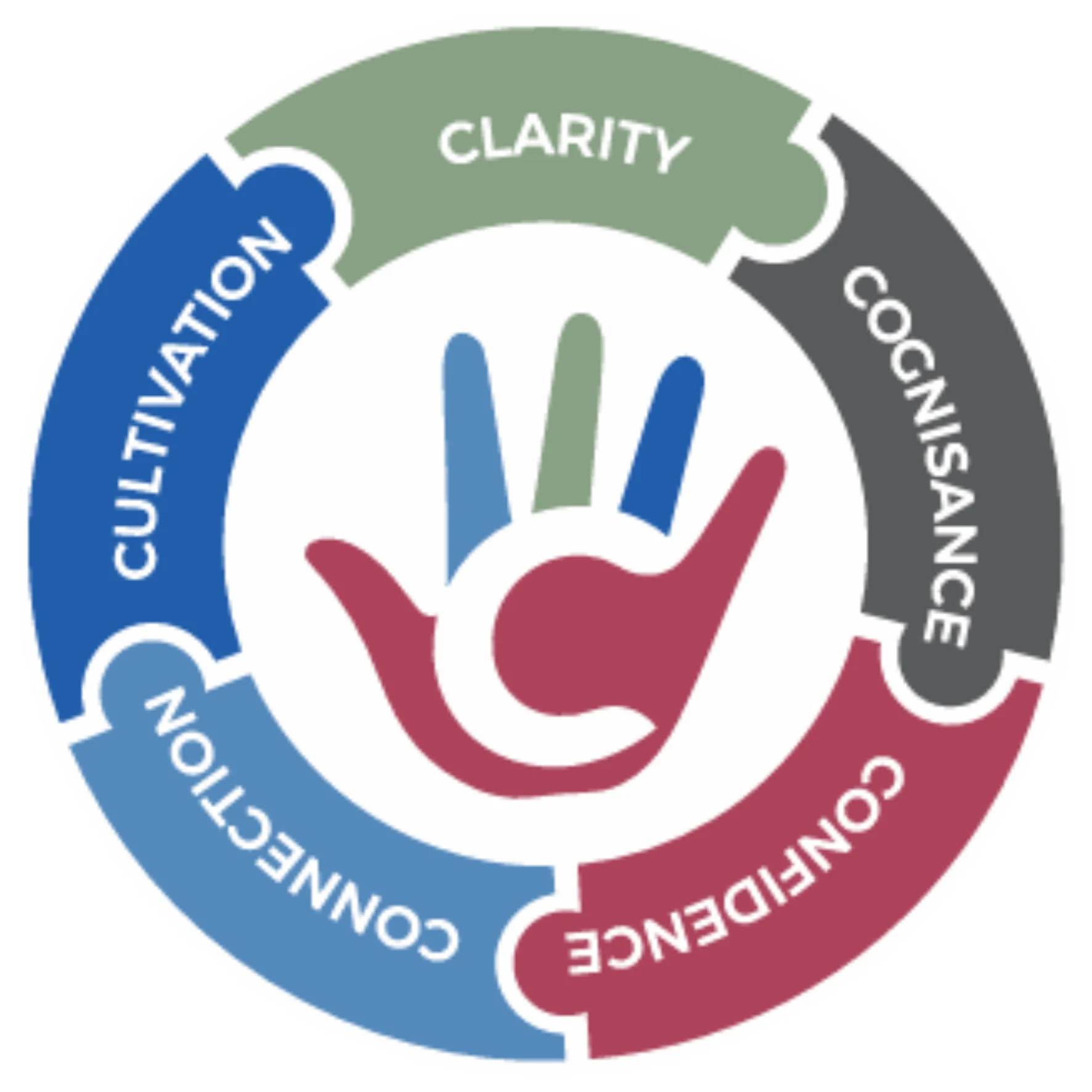
The Five-C Method™: GEA’s Approach to Learning
The Five-C Method™ provides a structured framework for teaching and learning across GEA’s Maths, English, OC, Selective School and Scholarship programs.
Cognitive Load Theory and the GEA Teaching Approach
GEA’s teaching methodology incorporates principles from Cognitive Load Theory (CLT).
Cognitive Load Theory examines how the limitations of working memory affect learning and how teaching can be structured to help students process new information more effectively.
This is particularly relevant when students are learning complex concepts in Mathematics, English, Thinking Skills and Mathematical Reasoning.
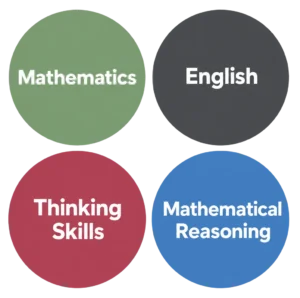
Understanding Cognitive Load
Cognitive Load Theory commonly considers different sources of cognitive demand during learning.
Learning and Schema Development
As students develop organised knowledge structures, or schemas, they can process increasingly complex information more efficiently.
GEA therefore helps students connect new learning with previous knowledge and recognise relationships between concepts rather than treating every question as an entirely new problem.
How We Apply Cognitive Load Theory in Our Tutoring Programs
Cognitive Load Theory is not simply something we discuss at GEA. Its principles influence how lessons and learning materials are structured.

This is particularly valuable when preparing for Selective School, OC and Scholarship examinations, where unfamiliar questions can require students to determine which information matters.
The GEA UPSL™ Problem-Solving Strategy
GEA also uses the UPSL™ Problem-Solving Strategy, developed by Dr. Majeda Awawdeh and informed by her research.
UPSL provides students with a structured process for approaching mathematical word problems and unfamiliar problem-solving tasks.

The objective is not simply to help students obtain an answer. It is to develop a repeatable problem-solving process that students can apply when they encounter unfamiliar questions.
From Guided Learning to Independent Thinking
The ultimate goal of the GEA methodology is to move students progressively from:
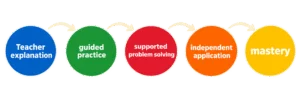
Our approach is designed to help students develop:
stronger conceptual understanding • mathematical reasoning • critical thinking • problem-solving skills • independent learning habits • academic confidence
These capabilities support students not only in school Mathematics and English, but also when preparing for Opportunity Class, Selective School, Scholarship and HSC examinations.
Research-Based Tutoring at Global Education Academy
Global Education Academy provides tutoring for students across primary and secondary school, including:
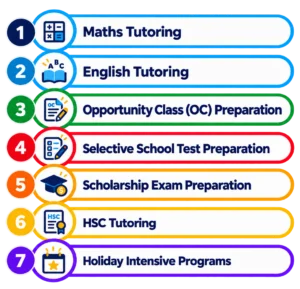
Students can attend GEA at our Turramurra tutoring centre on Sydney’s North Shore, our Kogarah tutoring centre in Sydney’s St George region, or through selected online programs.
Our aim is straightforward: help students understand how to think, not simply what to remember
At Global Education Academy (GEA), we take a scientific and research-based approach to English tutoring. Our structured Year 1 English program is designed to develop your child’s language skills with a clear focus on literacy fundamentals.
We cover all core components of the English language through a carefully crafted curriculum:
-
Reading – Improve fluency, decoding, and confidence through structured reading exercises.
-
Reading Comprehension – Strengthen understanding across a variety of text types and question styles.
-
Spelling – Develop memory retention with visual and auditory learning strategies.
-
Vocabulary – Learn 10–20 new academic words per session to boost written and spoken expression.
-
Grammar & Syntax – Master parts of speech and sentence structure in an age-appropriate way.
-
Punctuation – Apply punctuation rules with accuracy through guided practice and feedback.
-
Writing – Learn to plan, write, and edit across multiple genres using strategies inspired by high school-level writing, simplified for primary learners.
Our Year 1 English tutors in Sydney are experienced educators who understand how to make literacy enjoyable and effective. Whether your child is building confidence, preparing for school assessments, or aiming ahead — we’re here to help them succeed.
To show examples of our classroom teaching methods and to help you in your adventure of learning, we have put together a range of short videos that cover various mathematical concepts. Our belief in conceptual understanding has been proven year after year. The more concepts children understand, the more independent learners they become. In addition, the conceptual understanding reduces their cognitive load while solving questions. It makes it easier for the brain to drive the novel information into their long-term memory, a matter that makes learning more enjoyable, stress-free and permanent. This great new resource is free and is our way of supporting parents.